
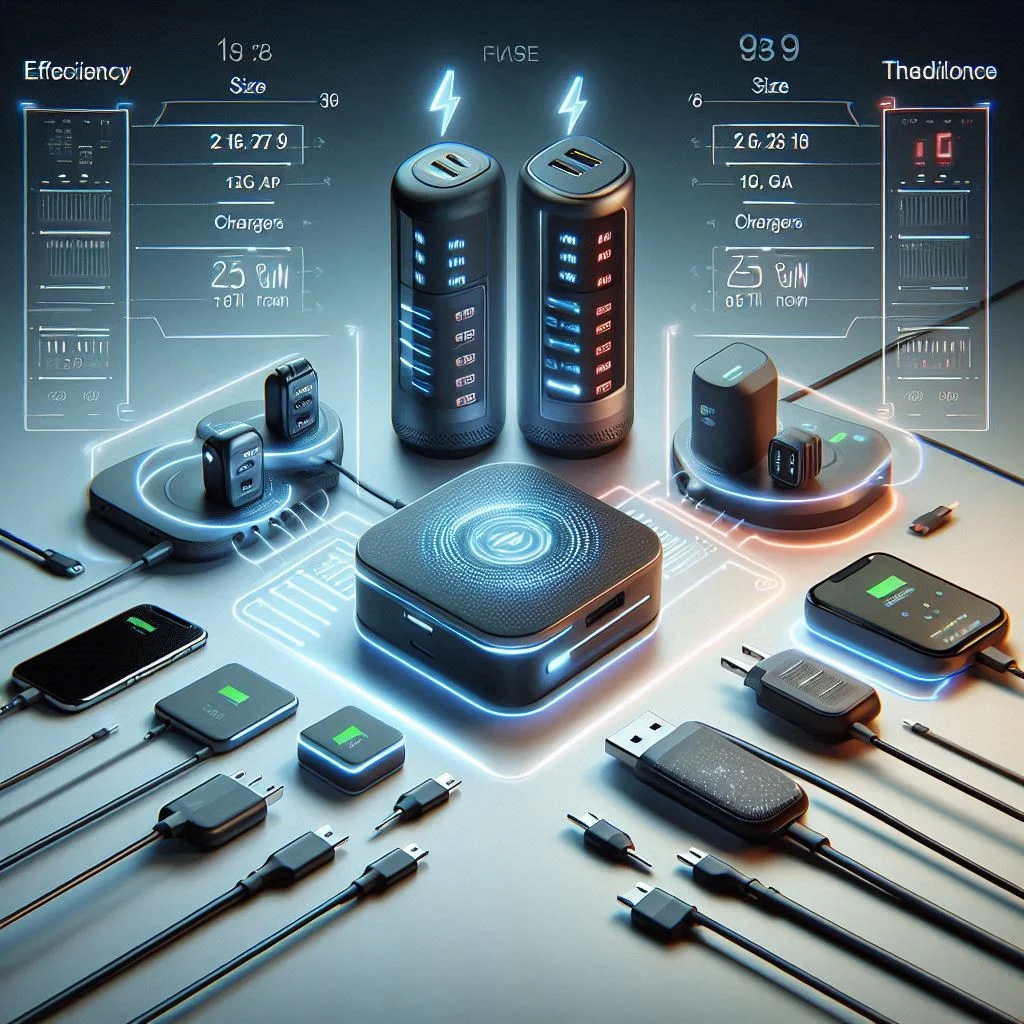
As smartphones, tablets, and laptops become more powerful, the demand for faster and more efficient charging solutions has grown dramatically. In recent years, a new technology called Gallium Nitride (GaN) has started replacing traditional silicon-based chargers. Many tech brands now promote GaN chargers as the future of power adapters, promising faster charging speeds, compact designs, and improved energy efficiency.
But does that mean traditional chargers are outdated? Or are they still practical for everyday use?
This guide explores the key differences between GaN chargers and traditional chargers, how they work, and which option is better in 2026 for modern mobile users.
Understanding Traditional Chargers
Traditional chargers use silicon-based semiconductors to convert AC electricity from wall outlets into DC power suitable for charging smartphones and other electronic devices.
Silicon has been the foundation of power electronics for decades because it is inexpensive, widely available, and reliable. Most older phone chargers and power adapters rely on this technology.
However, silicon has physical limitations. When electricity passes through silicon circuits, some energy is lost as heat. This energy loss reduces efficiency and requires larger components to manage heat buildup.
Typical silicon chargers operate at about 80–85% energy efficiency, meaning a portion of the power is wasted during conversion.
Because of these limitations, traditional chargers often:
- Generate more heat
- Require larger internal components
- Have bulkier designs
- Deliver slower charging speeds compared to newer technologies
Despite these drawbacks, silicon chargers remain affordable and widely compatible with many devices.
What Is a GaN Charger?
A GaN charger uses Gallium Nitride, a next-generation semiconductor material that replaces silicon in power conversion circuits.
Gallium Nitride allows electrons to move more efficiently through the material, enabling higher switching speeds and lower resistance. This improves power delivery and significantly reduces energy loss during charging.
Because of these properties, GaN chargers can operate at higher voltages and frequencies while generating less heat. The result is a charger that is smaller, faster, and more efficient.
Many modern USB-C chargers now use GaN technology to deliver high power outputs such as 65W, 100W, or even 140W, allowing them to charge smartphones, tablets, and laptops from a single compact adapter.
Key Differences Between GaN and Traditional Chargers
1. Charging Efficiency
One of the biggest advantages of GaN technology is its superior efficiency.
GaN chargers can reach 90–95% power conversion efficiency, while traditional silicon chargers typically operate around 80–85% efficiency.
Higher efficiency means:
- Less energy wasted
- Faster charging
- Lower electricity consumption
Over time, this efficiency can reduce overall energy loss and improve device charging performance.
2. Size and Portability
GaN chargers are significantly smaller than traditional chargers.
Because GaN semiconductors operate at higher frequencies, they require fewer internal components such as large transformers and heat sinks. This allows manufacturers to design chargers that are 30–60% smaller than silicon equivalents.
For example, a 65W GaN charger can be compact enough to fit in a pocket, while a traditional 65W charger may resemble a large laptop brick.
This portability makes GaN chargers particularly popular among travelers and mobile professionals.
3. Heat Generation
Heat is a major factor in charger performance and safety.
Traditional silicon chargers generate more heat because they lose more energy during power conversion. In contrast, GaN chargers produce significantly less heat thanks to their higher efficiency.
Lower heat levels provide several benefits:
- Improved safety
- Reduced risk of overheating
- Longer charger lifespan
Less heat also helps protect your device’s battery during fast charging.
4. Power Output and Multi-Device Charging
GaN chargers are designed to support higher power densities, meaning they can deliver more watts in a smaller space.
Many modern GaN chargers include multiple USB-C ports that can charge several devices simultaneously—such as a phone, tablet, and laptop—from a single adapter.
Traditional chargers often struggle with this capability because their internal components cannot handle high power efficiently.
5. Lifespan and Reliability
Because GaN chargers operate cooler and more efficiently, they generally experience less internal stress on components.
Some industry estimates suggest GaN chargers may last 5–10 years, compared with around 2–5 years for traditional chargers.
This longer lifespan can reduce electronic waste and make GaN chargers a more sustainable option.
6. Price
Despite their advantages, GaN chargers still tend to be more expensive than traditional chargers.
Traditional chargers are cheaper to manufacture because silicon technology has been widely used for decades. GaN technology is newer and involves more advanced manufacturing processes.
However, as production increases, the price difference continues to shrink, making GaN chargers more accessible to consumers.
When Should You Choose a GaN Charger?
GaN chargers are ideal if you:
- Need fast charging for multiple devices
- Travel frequently and want a compact charger
- Use USB-C laptops, tablets, and smartphones
- Prefer energy-efficient technology
They are especially useful for professionals who carry several devices and want a single charger solution.
When Traditional Chargers Still Make Sense
Traditional chargers are still suitable if you:
- Only charge basic smartphones
- Want the cheapest charging solution
- Don’t need high power outputs
- Already have reliable chargers
For simple use cases, a traditional charger may still perform perfectly well.
The Future of Charging Technology
Industry trends suggest GaN technology will continue expanding across consumer electronics. As manufacturing costs decrease and demand for fast charging increases, more devices will ship with GaN chargers by default.
The ability to deliver high power in a small, energy-efficient design makes GaN ideal for modern electronics such as laptops, gaming devices, and even electric vehicles.
Conclusion
Both GaN chargers and traditional silicon chargers serve the same basic purpose: powering your devices safely and efficiently. However, GaN technology represents a major advancement in charger design.
Compared with traditional chargers, GaN adapters offer:
- Higher efficiency
- Smaller size
- Faster charging capabilities
- Lower heat generation
- Better multi-device charging support
While traditional chargers remain affordable and reliable for basic use, GaN chargers clearly provide a more advanced and future-ready charging solution.
In 2026, if you want maximum performance, portability, and efficiency, GaN chargers are widely considered the better choice for modern devices.

