
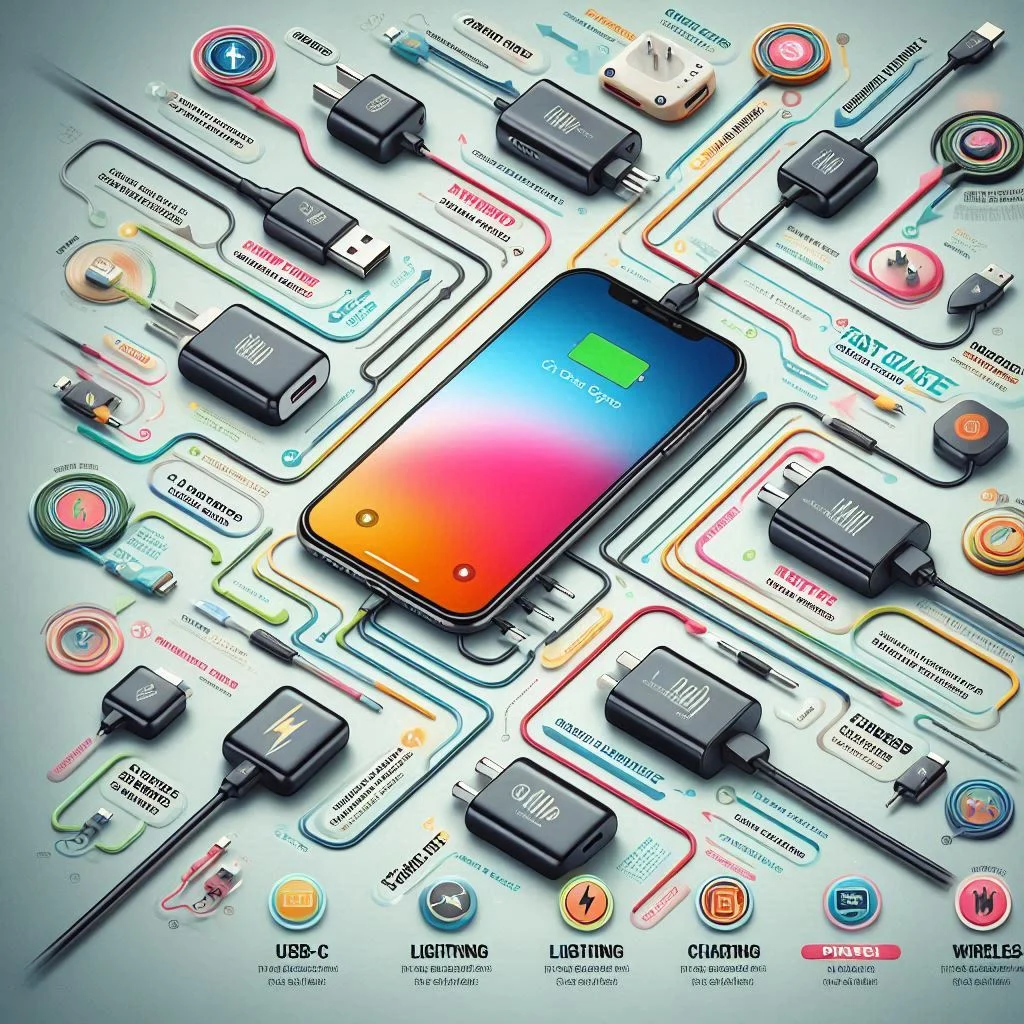
n today’s fast-paced digital world, smartphones have become essential tools for communication, work, entertainment, and productivity. As our reliance on mobile devices grows, so does the need for faster and more efficient charging solutions. Waiting several hours for a phone to charge is no longer practical, which is why fast charging technology has become a standard feature in modern smartphones.
Companies like Samsung, Apple, and Xiaomi have introduced advanced charging technologies that can power a device up to 50–70% in less than 30 minutes. However, with so many chargers available in the market, choosing the right one can be confusing.
Understanding how fast charging works and what features to look for will help you protect your phone’s battery, improve charging speed, and avoid unsafe accessories.
What Is Fast Charging?
Fast charging is a technology that increases the amount of power delivered to your smartphone battery. Traditional chargers typically supply around 5 watts of power, which means charging a phone can take several hours. Fast chargers, on the other hand, deliver significantly higher power levels—often ranging from 18W to over 100W—allowing devices to recharge much more quickly.
Modern smartphones use intelligent charging systems that control the flow of power to prevent overheating and protect the battery. This ensures that the battery charges quickly during the early stages and slows down when nearing full capacity to maintain long-term battery health.
Types of Fast Charging Technologies
Different smartphone manufacturers use different fast charging standards. Understanding these standards is important when selecting a charger.
USB Power Delivery (USB-PD)
USB Power Delivery is one of the most widely used charging standards. It allows devices to negotiate the optimal amount of power required for safe and efficient charging.
Many modern smartphones, tablets, and laptops support USB-PD, making it a universal and versatile charging solution.
Qualcomm Quick Charge
Qualcomm’s Quick Charge technology is common in Android devices powered by Snapdragon processors. It dynamically adjusts voltage levels to speed up charging without damaging the battery.
Proprietary Fast Charging
Some manufacturers develop their own proprietary technologies designed specifically for their devices. For example:
- OPPO uses SuperVOOC charging
- Xiaomi offers HyperCharge
- Samsung uses Super Fast Charging
These systems can reach extremely high charging speeds but may require brand-specific chargers and cables.
Key Factors to Consider When Choosing a Charger
Choosing the right charger involves more than just picking the one with the highest wattage. Several factors determine compatibility and safety.
Charger Wattage
Always choose a charger that matches or slightly exceeds the wattage supported by your phone. For example, if your device supports 25W charging, using a 30W charger is fine, but using a 10W charger will slow the charging process.
Cable Quality
Many people overlook the importance of charging cables. A high-quality USB-C cable capable of handling higher power levels is essential for fast charging. Poor cables can limit charging speed or even cause overheating.
Safety Certifications
Look for chargers that include safety protections such as over-voltage protection, temperature control, and short-circuit protection. Certified chargers reduce the risk of battery damage.
Port Compatibility
Modern chargers often include multiple ports such as USB-C and USB-A. USB-C ports typically support higher power delivery and faster charging speeds.
Advantages of Using a Fast Charger
Fast charging technology offers several practical benefits for everyday smartphone users.
First, it significantly reduces charging time, allowing users to quickly power their devices before leaving home or during short breaks. This convenience is particularly valuable for professionals, travelers, and heavy smartphone users.
Second, modern fast chargers are designed with intelligent power management systems that optimize charging efficiency while maintaining battery safety.
Finally, newer chargers are becoming more compact thanks to technologies like Gallium Nitride (GaN), making them easier to carry while still delivering high power output.
Common Mistakes to Avoid
Many users unknowingly reduce charging efficiency or damage their devices by making simple mistakes.
Using cheap, uncertified chargers is one of the biggest risks. Low-quality chargers often lack safety features and can harm the battery.
Another mistake is using incompatible cables that cannot support high-speed charging. Even the best charger cannot deliver fast charging without the correct cable.
Lastly, constantly charging your phone in extreme heat environments can negatively impact battery health over time.
Conclusion
Fast charging has transformed the way we power our smartphones, offering speed, convenience, and improved efficiency. However, choosing the right charger requires understanding your device’s compatibility, selecting the correct wattage, and using high-quality cables and certified accessories.
By investing in the right charging equipment, you not only enjoy faster charging but also extend the lifespan of your smartphone battery. As mobile technology continues to evolve, fast charging will remain an essential feature that keeps our devices ready whenever we need them.

