
In today’s digital world, smartphones have become essential tools for communication, work, and entertainment. Whether you are using your phone for business, social media, navigation, or online payments, one thing remains constant—reliable charging is critical. However, many users overlook the importance of using a safe and original mobile charger, often opting for cheaper alternatives that may look similar but lack proper safety standards.
The global market is flooded with counterfeit and low-quality chargers that claim to deliver fast charging but actually pose serious risks. Poorly manufactured chargers can cause battery damage, overheating, slow charging, electric shocks, and even fire hazards. In many cases, these fake chargers fail to regulate voltage properly, which can permanently damage your smartphone’s internal components.
Identifying a genuine charger may seem difficult, especially when counterfeit products mimic the appearance of original brands. But with the right knowledge, you can easily spot the difference between a safe, certified charger and a risky imitation.
In this comprehensive guide, we will explore how to identify a safe and original mobile charger, what features to check before buying, and how to protect your device from potential charging hazards.
Why Using an Original Charger Matters
Before learning how to identify a genuine charger, it is important to understand why it matters.
Original chargers are designed specifically to match the power requirements, battery chemistry, and charging protocols of your smartphone. Manufacturers test these chargers under strict safety standards to ensure stable voltage output and efficient power delivery.
Using an original charger provides several benefits.
First, it protects your phone’s battery health. Proper voltage regulation prevents overcharging and overheating, which are common causes of battery degradation.
Second, genuine chargers ensure consistent and faster charging performance. Fake chargers often advertise fast charging but fail to deliver the correct wattage.
Third, certified chargers include built-in safety protections such as short-circuit protection, temperature control, and surge protection.
Finally, original chargers reduce the risk of electric shock, fire hazards, or device damage.
Because smartphones have become expensive investments, protecting them with a safe charger is essential.
Signs of a Safe and Original Mobile Charger
Identifying a genuine charger involves paying attention to several details. From packaging quality to technical specifications, each factor can help confirm authenticity.
Check the Brand and Manufacturer
The first step is to purchase chargers from reputable brands or authorized sellers. Well-known manufacturers invest heavily in safety testing and product certification.
Original chargers usually come from:
- Smartphone manufacturers
- Certified accessory brands
- Official retail stores
- Authorized distributors
If a charger is sold at an extremely low price compared to the official one, it is often a sign of a counterfeit product.
Authentic brands maintain strict quality control, while fake manufacturers focus mainly on appearance rather than safety.
Inspect the Packaging Quality
One of the easiest ways to identify an original charger is by examining its packaging.
Original products usually come with high-quality packaging materials, clear printing, and accurate branding. The box often includes product information such as:
- Manufacturer name
- Model number
- Input and output specifications
- Certification logos
- Warranty details
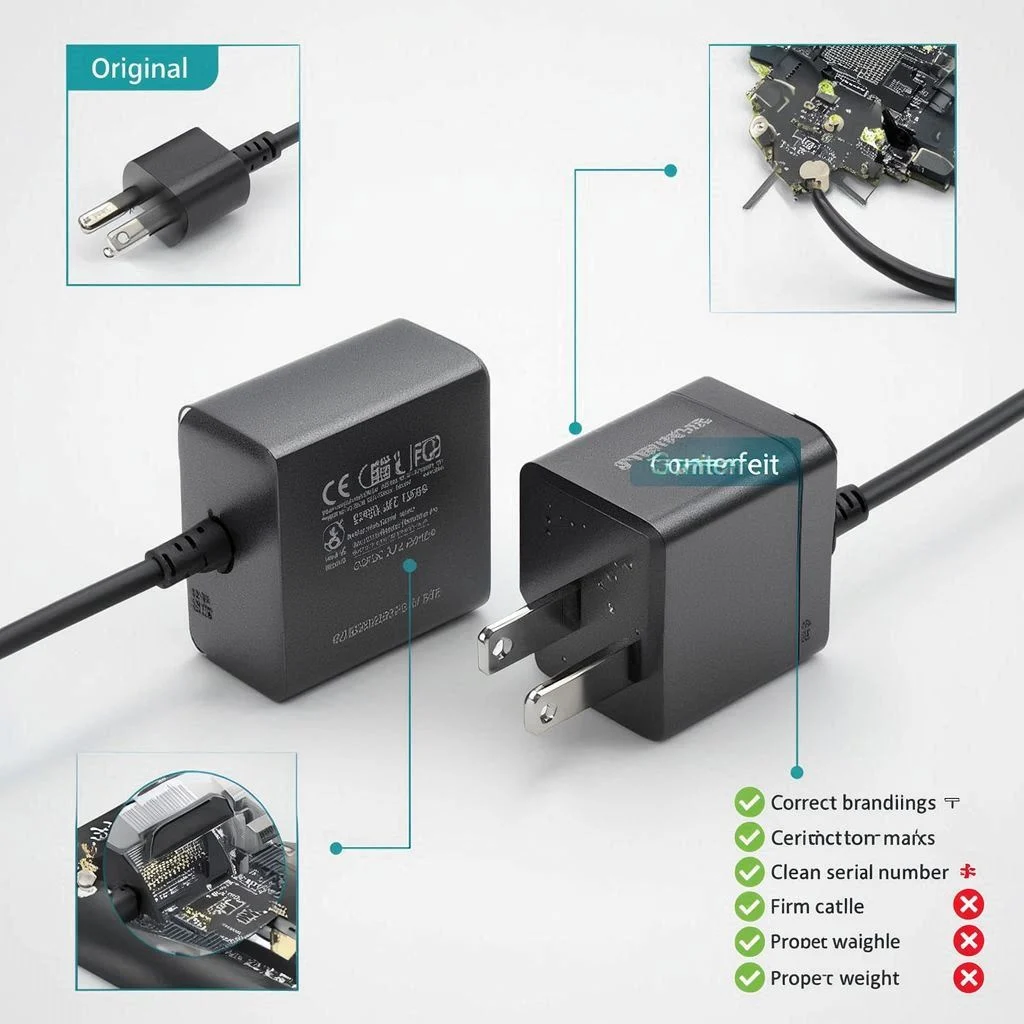
Counterfeit chargers often use cheap packaging, blurry text, or incorrect logos. Sometimes the spelling of the brand name may even be slightly altered to mimic the original brand.
If the packaging looks unprofessional or lacks important details, it is a warning sign.
Look for Safety Certification Marks
Authentic chargers always comply with international safety standards. These certifications confirm that the charger has passed strict electrical safety tests.
Common certification marks include:
- CE certification (European safety standard)
- FCC certification (U.S. communication compliance)
- RoHS compliance (environmental safety)
- UL certification (electrical safety testing)
These marks are usually printed on the charger body or packaging.
However, it is important to note that counterfeit chargers sometimes print fake certification logos. The best approach is to verify the certification through the manufacturer’s website whenever possible.
Check the Build Quality
Build quality is another important indicator of authenticity.
Original chargers typically have:
- Smooth and solid plastic construction
- Properly aligned USB ports
- Clean finishing without gaps or rough edges
- Durable cable connectors
Fake chargers often feel lightweight, loose, or poorly assembled. The plastic may look dull or fragile, and the USB ports may feel loose when connecting a cable.
High-quality construction ensures durability and safe electrical insulation, which are essential for preventing electrical hazards.
Verify the Output Power Rating
Every charger has specific input and output voltage ratings printed on its body.
These numbers indicate how much power the charger can safely deliver to your device.
For example, a typical charger might display specifications such as:
Input: 100–240V
Output: 5V/2A or 9V/2A
Original chargers provide accurate and stable power output that matches the requirements of your phone.
Counterfeit chargers often display misleading or incorrect specifications. Some may claim fast charging but fail to deliver the necessary wattage.
Always check your phone’s recommended charging power before purchasing a charger.
Confirm Compatibility With Fast Charging Technology
Modern smartphones use advanced fast-charging technologies. These systems require chargers that support specific protocols.
Common fast-charging standards include:
- Qualcomm Quick Charge
- USB Power Delivery (PD)
- Samsung Adaptive Fast Charging
- SuperVOOC and other proprietary technologies
Original chargers are designed to support these protocols safely.
Fake chargers often advertise fast charging but lack the necessary internal chips to regulate power correctly. As a result, they may charge slowly or cause excessive heat.
Choosing a charger that officially supports your phone’s charging standard ensures safe and efficient charging.
Common Warning Signs of Fake Chargers
While some counterfeit chargers are easy to identify, others can be more convincing. Here are some warning signs that should raise suspicion.
The charger price is significantly lower than the original retail price.
The brand name appears slightly misspelled or altered.
The charger becomes extremely hot during use.
Charging speed is inconsistent or unusually slow.
The cable connection feels loose or unstable.
The charger emits buzzing sounds or sparks.
If you notice any of these issues, it is best to stop using the charger immediately.
Tips for Buying a Safe Mobile Charger
To avoid counterfeit chargers, consider following these best practices.
Always buy chargers from authorized stores or trusted online retailers. Official brand stores usually guarantee product authenticity.
Check customer reviews before purchasing chargers online. Feedback from previous buyers can reveal whether the charger performs as expected.
Avoid extremely cheap chargers that promise unrealistic charging speeds.
Choose reputable accessory brands that specialize in certified mobile charging products.
Finally, keep your charger away from water, excessive heat, and physical damage to maintain long-term safety.
The Risks of Using Fake Chargers
Using counterfeit chargers may seem like a small risk, but the consequences can be serious.
Low-quality chargers can cause battery swelling or permanent battery damage due to unstable voltage.
Poor insulation inside fake chargers increases the risk of electric shock.
Excessive heat generated by unsafe chargers can lead to phone overheating or fire hazards.
In some cases, counterfeit chargers may even damage the phone’s charging port or internal power management circuits.
Considering the high cost of modern smartphones, the small savings from buying a fake charger are rarely worth the risk.
Conclusion
Choosing a safe and original mobile charger is essential for protecting your smartphone, your safety, and your investment. With the growing number of counterfeit accessories on the market, consumers must become more aware of how to identify genuine charging products.
By carefully examining packaging quality, certification marks, build materials, output specifications, and brand reputation, you can easily distinguish between authentic chargers and unsafe imitations.
A high-quality charger ensures stable power delivery, efficient charging speeds, and long-term battery health. It also provides built-in safety protections that help prevent overheating, short circuits, and other electrical hazards.
Ultimately, investing in a reliable charger from a trusted manufacturer is a small step that can make a big difference in device safety, performance, and longevity.

